
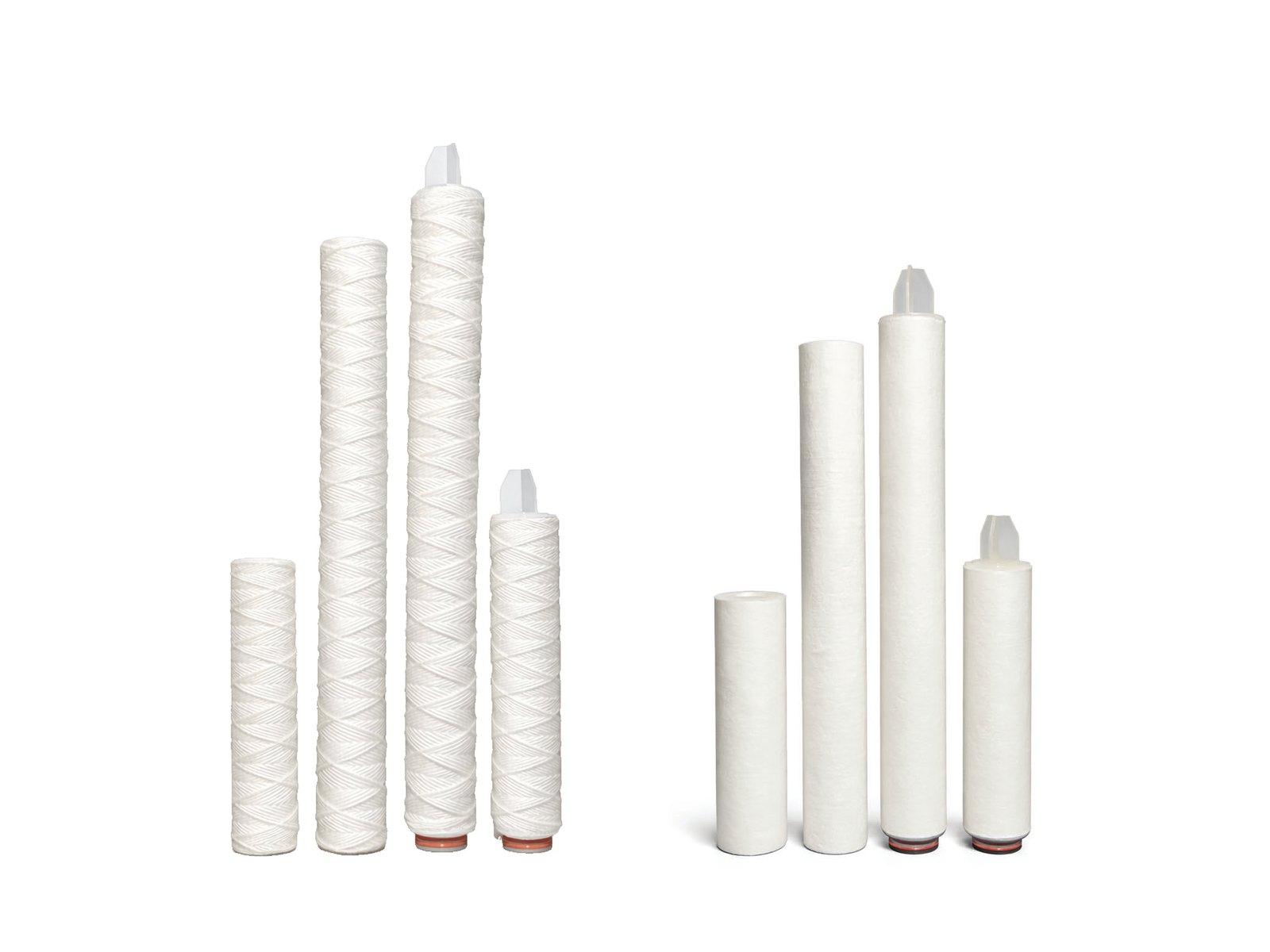
Which one is right for you
- Melt blown is right for you if you filter water or a thin, clean process liquid below 80 °C, you feed RO membranes or a finer final filter, and you want an all-polypropylene filter cartridge with no binders, lubricants or additives in the media.
- String wound is right for you if the sediment is heavy or changes from day to day, the liquid is viscous, hot, acidic or a solvent, you need a metal core, or you need a rating coarser than 25 µm.
- Both, in one train, where the load is heavy and the final rating is fine: a wound stage takes the coarse dirt and a melt blown stage after it sets the rating.
If the lowest price per piece is the only test, Gopani is probably not your supplier. The cost that matters on a plant is the cost per cubic metre filtered: the price, times the change-outs a year, plus the labour and downtime of each change. Ask for both formats in one request, a melt blown and a string wound option for the same housing and duty, and compare them on that.
RO pre-filtration, industrial water or reuse water? Request a melt blown quote
Process liquids, heavy sediment, viscous fluids, acids or solvents? Request a string wound quote
Not sure which duty you have? Discuss your application
String wound vs melt blown: side by side
| Melt blown (spun) | String wound (thread) | |
|---|---|---|
| Gopani range | RO Protect Extreme, Prime, Eco Plus, Eco and Ultra | Clarywound 3X, Extreme, Ultra, Extreme Bico and GF |
| Construction | Polypropylene fibres meltblown into a graded depth tube, coarse outside and dense inside, thermally bonded | Yarn wound onto a core, looser outside and denser toward the core |
| Filter media | Polypropylene only, with no resin binders, lubricants or additives | Polypropylene, cotton, glass fibre or Bico; nylon, rayon and polyester on request |
| Core | Coreless, or a polypropylene core where the grade offers one | Polypropylene, glass filled polypropylene, stainless steel or tinned steel |
| Micron ratings | 0.5 to 25 µm across the five grades | 0.5 to 150 µm in Extreme, Extreme Bico and GF; 1 and 5 µm in 3X; 5 and 10 µm in Ultra |
| Lengths | 10" to 40"; RO Protect Prime to 70" | 9.75" to 70" |
| Outside diameter | 61, 63 or 110 mm, by grade | 61, 63, 63.5 or 110 mm, by line |
| Maximum temperature | 60 or 80 °C, by grade | 70 to 80 °C in polypropylene; 120 to 140 °C in cotton, polyester, nylon or rayon on a stainless steel core, and in Bico; 350 °C in glass fibre |
| Recommended change-out | 1.2 to 2.4 bar differential pressure, by grade | 1.2 to 2.5 bar differential pressure, by line |
| Where it wins | Pre-RO and desalination, industrial, process, reuse and waste water, chemical processing fluids, food and beverage | Heavy or changing sediment, viscous fluids and mastics, edible oils, electroplating, power generation, hot liquids, acids and organic solvents |
Change-out pressures at 21 °C; confirm against your fluid and temperature.
In India a melt blown filter cartridge is often called a spun or PP spun filter, and a string wound one a thread, rope or wound filter. The names describe how each is made: fibres spun out of molten polypropylene, or thread wound onto a core.
How each one filters
A melt blown filter cartridge is made by blowing molten polypropylene into fine fibres and laying them down as a tube, coarse at the outside and dense toward the centre. Particles load through the wall, coarse ones near the outside and fine ones further in. The fibres are bonded by heat, so the RO Protect grades are made without resin binders, lubricants or additives, and RO Protect Eco and Eco Plus add no taste, odour or colour to the filtered liquid.
A string wound filter cartridge is yarn wound onto a core, looser outside and tighter toward the core. Coarse particles stop in the open outer layers and finer ones toward the core, so the filter cartridge takes coarse dirt without blinding at the face. Because the yarn and the core can be chosen, one format covers polypropylene for water, Bico for viscous fluids and glass fibre on stainless steel for acids and heat.
- What is a melt blown (PP spun) cartridge filter?Guide, melt blown filter cartridges
- What is a string wound cartridge filter?Guide, string wound filter cartridges
Turn this into a specification.
Send the fluid, flow, temperature and the micron rating you need, or the part number you run today. We will reply with the Gopani filter cartridge, bag or housing for the duty and a quotation.
How to choose by duty
- Water and RO feed. Melt blown. Its fine, even fibre structure suits water, and nothing is added to the media. Use the rating the membrane supplier specifies for the final pre-filter.
- Heavy or changing sediment. String wound, or a wound stage ahead of melt blown, so the fine stage sees only what is left.
- Viscous liquids, oils and mastics. String wound. Clarywound Extreme Bico is made for viscous fluids and mastics up to 120 °C.
- Above 80 °C. String wound, in a yarn and core rated for the heat: cotton, polyester, nylon or rayon on a stainless steel core from 120 to 140 °C, glass fibre to 350 °C. Melt blown polypropylene is rated to 60 or 80 °C, by grade.
- Acids, organic solvents and reactive chemicals. Check every wetted material first. Clarywound GF, glass fibre on a stainless steel core, is made for corrosive liquids, organic solvents and acids. RO Protect Extreme, all polypropylene, is made for chemicals, solvents and slurries within the limits of polypropylene.
- Coarser than 25 µm. String wound. The melt blown grades stop at 25 µm; Clarywound Extreme, Extreme Bico and GF run to 150 µm.
- Compare cost per cubic metre filtered. Price per filter cartridge, times change-outs per year, plus the labour and downtime of each change. The cheaper filter cartridge is not always the cheaper filtration.
Gopani lines by duty
Start from the duty, not the product name. Each line links to its page; the figures are its own.
- Water, RO and desalination pre-filtration
- RO Protect Eco
- Rating 1 to 25 µm
- Max temp 80 °C
- Change-out 1.4 bar
RO Protect Prime- Rating 1, 5, 10 µm
- Max temp 80 °C
- Change-out 1.5 bar
- Drinking and pharmaceutical water
- Fine pre-filtration down to 0.5 µm, chemicals and solvents
- RO Protect Extreme
- Rating 0.5, 1, 5 µm
- Max temp 80 °C
- Change-out 2.4 bar
- Long housings, up to 70" in melt blown
- RO Protect Prime
- Rating 1, 5, 10 µm
- Max temp 80 °C
- Change-out 1.5 bar
- Heavy sediment and general process liquids
- Clarywound Extreme
- Rating 0.5 to 150 µm
- Change-out 2.5 bar
- Lengths 9.75" to 70"
- Viscous fluids and mastics
- Clarywound Extreme Bico
- Rating 0.5 to 150 µm
- Max temp 120 °C
- Change-out 2.5 bar
- Acids, organic solvents and hot corrosive liquids
- Clarywound GF
- Rating 0.5 to 150 µm
- Max temp 350 °C
- Change-out 2 bar, SS core
Change-out pressure is a recommendation; confirm against your fluid and temperature.
Temperatures are maxima for the stated media and core.
Ask an application engineer for the current datasheet.
Replacing a cartridge you already use?
Gopani makes replacement cartridges to a part number, a sample or a drawing. Give the make and the part number you run today, or what the end cap or nameplate shows, with the micron rating and the fluid. We will reply with the cartridge we would supply for your housing and duty, or ask for what is missing.
Replacement filter cartridges, every family
Send the make and part number
Common mistakes
- Choosing on price per piece. A filter cartridge that costs less but is changed more often can cost more per cubic metre filtered, once labour and downtime are counted.
- Reading two 5 µm ratings as the same. Both formats are usually rated nominal, and nominal ratings are stated under different tests. Ask for the basis of each rating before you compare.
- Running polypropylene above its temperature. Melt blown and polypropylene wound filter cartridges are rated to 60 to 80 °C. Above that, choose a wound yarn and core rated for the heat.
- One fine stage carrying the whole load. A single melt blown stage on raw water with heavy sediment loads quickly. Put a coarser wound stage or a filter bag ahead of it.
- Changing on the calendar, not the gauge. Fit gauges before and after the housing and change at the recommended differential pressure for the line, or when flow falls below what the process needs.
- Assuming any 10" filter cartridge fits. Check the end fitting, the outside diameter and the seal. Some melt blown grades are DOE only; others, and Clarywound Extreme, come with a choice of end caps such as Code-7 and SOE.
Why two filter cartridges marked "5 micron" can retain very different amounts is covered in the Filtration Academy. Nominal and absolute ratings
Frequently asked questions
String wound filter vs meltblown: which is better?
Each is better at a different duty. Melt blown is the usual choice for water and RO pre-filtration: fine, even polypropylene fibres with nothing added to the media. String wound is the choice for heavy or changing sediment, viscous fluids, heat, acids and solvents, and for ratings coarser than 25 µm.
String wound filter vs polypropylene filter: what is the difference?
A "polypropylene filter" usually means a melt blown polypropylene filter cartridge. String wound filter cartridges are often polypropylene too: Clarywound 3X and Ultra are polypropylene yarn on a polypropylene core. The difference is the structure, fibres blown into a tube against yarn wound on a core, not the polymer.
Spun filter vs thread filter: which should I use?
A spun filter is a melt blown (PP spun) filter cartridge and a thread filter is a string wound one. Use spun for water and RO feed. Use thread for heavy sediment, oils and viscous liquids, hot liquids, acids and solvents.
Wound filter vs spun filter for an RO plant?
A spun (melt blown) filter cartridge is the usual RO pre-filter. Where the raw water carries heavy or changing sediment, a wound filter cartridge or a filter bag ahead of it takes the coarse load so the spun stage lasts. Use the final pre-filter rating the membrane supplier specifies.
Melt blown vs string wound: which lasts longer?
It depends on the dirt load, not the format. On clean water a melt blown filter cartridge runs long. On heavy, coarse or changing sediment a wound filter cartridge, whose open outer layers take coarse dirt, avoids blinding at the face. Log the differential pressure on your own duty and compare the cost per cubic metre filtered.
Can a melt blown filter cartridge replace a string wound one in the same housing?
Often, where the length, outside diameter and end fitting match: both come in 10" to 40" at an outside diameter of 61 or 63 mm. Check the temperature and the fluid first, because melt blown polypropylene is rated to 60 or 80 °C, by grade.
Which is better for hot liquids?
String wound, in a yarn and core rated for the temperature: 120 to 140 °C in cotton, polyester, nylon or rayon on a stainless steel core, and up to 350 °C in glass fibre. Melt blown polypropylene is rated to 60 or 80 °C, by grade.
What micron ratings are available?
RO Protect melt blown filter cartridges: 0.5 to 25 µm across five grades. Clarywound string wound filter cartridges: 0.5 to 150 µm in Extreme, Extreme Bico and GF, 1 and 5 µm in 3X, and 5 and 10 µm in Ultra.
Ask an application engineer
Describe your fluid and duty
Choosing between melt blown and string wound for your liquid? Describe the fluid and the duty. We will reply by email.
Catalogues
Request a catalogue
Each catalogue holds the full specification, dimensions and ordering codes. Catalogues are sent by email on request.
- RO Protect Eco Catalogue, revised Sep 2026Request catalogue
- RO Protect Extreme Catalogue, revised Sep 2026Request catalogue
- RO Protect Prime Catalogue, revised Mar 2026Request catalogue
- Clarywound Extreme Catalogue, revised Apr 2026Request catalogue
- Clarywound 3X Catalogue, revised Apr 2026Request catalogue
- Clarywound GF Catalogue, revised Apr 2026Request catalogue
Related guides
- What is a melt blown (PP spun) cartridge filter?Guide, melt blown filter cartridges
- What is a string wound cartridge filter?Guide, string wound filter cartridges
- String wound vs pleated filter cartridgesGuide, choosing a filter cartridge
- What is a sediment filter cartridge?Guide, sediment filters
- What is a cartridge filter?Guide, cartridge filters