
Filtration for pharma, from drug intermediates and API to formulations, biotech, R&D and utilities.
One partner for the filtration points across a pharma site, each matched to what it has to protect and backed by the documentation your audits and validation ask for.
- Drug intermediates and APICatalyst kept in a closed circuit, solvents and carbon-treated liquors clarified, the product brought within its bioburden limits.
- FormulationsSterilizing-grade filtration of parenteral and ophthalmic solutions, with the vents, gases and clean steam around the fill.
- BiotechMedia and buffer, fermentor air and exhaust, sparging, clarification after harvest and final filtration.
- R&D and QC laboratorySample and mobile phase filtration, so results reflect the sample and not the particles in it.
- UtilitiesPurified water and WFI, compressed air, nitrogen and steam, cleaned at the point where they meet the product.
 Drug intermediates and APIFrom the tank farm to solvent recovery: keep the catalyst, keep solids out of the reactor, and bring the product within its limits.The API process
 FormulationsProtect the sterile fill: water, vents, gases and steam under control, and a final filter that passes its integrity test.The formulations process
 BiotechProtect the culture and the product: sterile media and air, dry vents, and a clarified stream for final filtration.The biotech process
Drug intermediates and API
Protect each step of API synthesis, from the tank farm to solvent recovery.
Seven filtration points in a typical API plant, and what each one has to protect. The right filter at each point depends on your solvent, temperature and batch, so it is chosen with you.
- Stage 1Raw materials and solventsParticles from drums, tankers and transfer lines are stopped before the reactor, where they would end up in the product.Enquire: Raw materials and solvents
- Stage 2Process water and tank ventsProcess water reaches the batch at the quality the batch record states, and storage tanks breathe through a hydrophobic vent filter instead of drawing in room air.Explore: Process water and tank vents
- Stage 3Gases, compressed air and steamNitrogen, compressed air and process steam are cleaned at the point of use, so the utility that blankets, transfers or heats the batch does not contaminate it.Explore: Gases, compressed air and steam
- Stage 4Reaction and catalyst recoveryPrecious metal catalyst is held back in a closed circuit and returned to the next batch, so it is not lost to the filtrate and operators do not handle the cake.Explore: Reaction and catalyst recovery
- Stage 5Carbon treatment and clarificationAfter decolourising, the powdered carbon has to come back out. A stage sized for the carbon load keeps fines out of crystallisation and away from the finer filters downstream.Enquire: Carbon treatment and clarification
- Stage 6Bioburden and endotoxin reductionThe product line is brought within its bioburden and endotoxin limits before isolation. A blinded membrane here stops the batch; a failed integrity test puts it on hold.Enquire: Bioburden and endotoxin reduction
- Stage 7Solvent recoverySolvent is cleaned before the distillation column, so the column stays free of solids and recovered solvent can go back into use.Enquire: Solvent recovery
- Pharma API in depthEach API stage on its own, with the challenges that stop batches and what to check first.Explore
Full process flow
The complete API process flow, every filtration point marked
A process flow diagram of a typical plant, showing where each filtration point sits and what it protects. Useful for a new line, a debottlenecking study or a validation review. Sent by email on request.
Drug intermediates and API
Catalyst kept in a closed circuit, not lost to the filtrate.
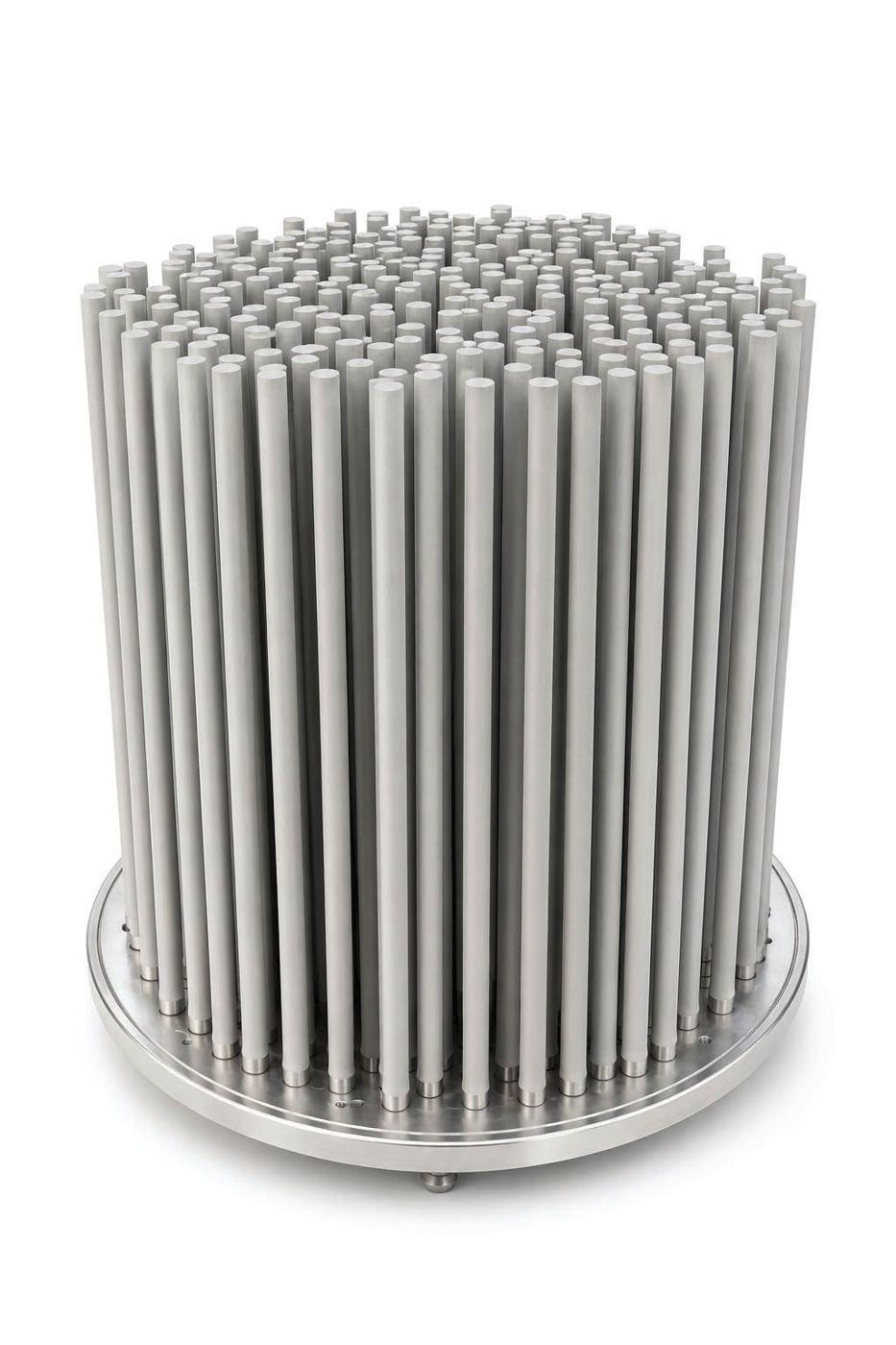
Closed-circuit catalyst recovery
Precious metal catalysts (Pd/C, Pt/C, Rh/C and Raney nickel) are retained on sintered metal elements in a closed circuit and recovered by backwashing. Integrated heel filters take the residual liquid in the vessel. Closed operation reduces fire hazard risk and operator exposure.
- Closed circuit
- Backwash recovery
- Heel filters
- No bag handling
Formulations
Keep every input to the sterile fill under control.
The filtration points in parenteral and ophthalmic manufacture. Their order varies from plant to plant; what each point has to protect does not.
- Point 1WFI and DM waterWater for injection and DM water go into every batch and every rinse. Filtration at the point of use holds particles and bacteria back from both.Enquire: WFI and DM water
- Point 2Tank ventsHolding tanks breathe as they fill and empty. A hydrophobic vent filter stands between the product and room air, and has to stay dry so the tank can always breathe.Explore: Tank vents
- Point 3Compressed air and nitrogenAir and nitrogen that touch the product or blanket a tank are filtered at the point of use to the same standard as the product line.Enquire: Compressed air and nitrogen
- Point 4Clean steam for SIPSteam that sterilizes vessels, lines and filter housings in place must not carry rust, scale or pipe debris into the system it is cleaning.Explore: Clean steam for SIP
- Point 5Pre-filtration and bioburden reductionPre-filtration takes the load off the sterilizing filter, so it lasts the batch instead of blinding halfway through a fill.Explore: Pre-filtration and bioburden reduction
- Point 6Sterilizing-grade filtration of LVP, SVP and ophthalmicsThe last barrier before filling. The filter is integrity tested before and after use, and both results go into the batch record.Enquire: Sterilizing-grade filtration of LVP, SVP and ophthalmics
- Point 7R&D and QC laboratorySamples and HPLC mobile phases are filtered so results reflect the sample, not the particles in it, and columns are protected.Explore: R&D and QC laboratory
- Pharma formulations in depthThe sterile fill point by point, with integrity testing and the challenges around it.Explore
Full process flow
The complete formulations process flow, every filtration point marked
A process flow diagram of a typical plant, showing where each filtration point sits and what it protects. Useful for a new line, a debottlenecking study or a validation review. Sent by email on request.
Biotech
Protect the culture and the product, from media preparation to final filtration.
Fermentation and cell culture need sterile inputs, dry vents and clean product streams. These are the points where filtration does that work.
- Stage 1Media and buffer preparationMedia and buffers are filtered on the way to the vessel, so the culture starts free of contaminating organisms.Enquire: Media and buffer preparation
- Stage 2Air and gas inletAir to the fermentor is filtered on the way in, for runs that last days. A filter that fails here can cost the whole run.Enquire: Air and gas inlet
- Stage 3Sparging and aerationGas is dispersed into the broth as fine bubbles, so oxygen reaches the culture evenly.Explore: Sparging and aeration
- Stage 4Exhaust and ventsMoist exhaust has to leave the vessel without wetting the filter, and without letting organisms in or out.Explore: Exhaust and vents
- Stage 5Steam for SIPSteam sterilizes the vessel and its lines between batches without carrying pipe debris into them.Enquire: Steam for SIP
- Stage 6ClarificationCells and debris are taken out after harvest, so the finer filters downstream see a clarified stream.Explore: Clarification
- Stage 7Downstream and final filtrationThe product is brought to its final bioburden specification before fill, with the integrity test records QA needs for release.Enquire: Downstream and final filtration
- Biotech in depthFermentation and cell culture stage by stage, with fermentor vents and sparging.Explore
Full process flow
The complete biotech process flow, every filtration point marked
A process flow diagram of a typical plant, showing where each filtration point sits and what it protects. Useful for a new line, a debottlenecking study or a validation review. Sent by email on request.
Evidence
100%
of Gopani bacterial retention grade membrane filter cartridges are integrity tested during production.
Validation and documentation
Documentation that shortens audits, validation and batch release.
The tests behind each sterilizing-grade membrane are published, and each filter is traceable by serial number. Your validation team starts from stated methods and records, not from questions to a supplier.
Bacterial retention
Retention is challenge-tested to ASTM F838, the standard method for sterilizing-grade claims. Your validation file can cite a recognised method instead of a supplier's own test.
How to read a retention ratingIntegrity testing
Each membrane has a stated minimum bubble point and the wetting fluid to test it with, and each filter is traceable by serial number. Operators test against a published value, and any result can be traced back to the individual filter.
Integrity testing explainedBiological safety
Endotoxin is measured by LAL, biological reactivity is tested to USP <87> and <88>, and non-fibre-releasing status is stated to 21 CFR 210.3(b)(6) for each membrane. Material qualification for product contact starts from that data.
Request cataloguesSterilization
Steam-in-place temperature, time per cycle and the number of cycles a membrane withstands are published, so your SIP cycle can be set, and a change assessed, against a stated limit. Filters are supplied non-sterile unless specified.
Troubleshooting
Common challenges
What each problem looks like on the line, what usually causes it, and the first two things to check.
API, reaction and catalyst recovery
Likely causes
- Bags bypassing at the seal or the collar
- Bags torn or disturbed at change-out
- Catalyst fines finer than the filter medium, often formed by attrition in the reactor
Check first
- Metal content in the filtrate, batch by batch
- Bag seating and the condition of the basket
What the right fix depends on
The catalyst and its particle size, the solvent, the batch size and cycle time, and the filtration you run today.
The Gopani equipment for this duty:Catalyst recovery systems
Segments
Explore each segment in depth.
Drug intermediates and API
The seven API filtration points in detail, the challenges at each and the equipment used.
Explore pharma APIFormulations
From WFI to the QC laboratory: the sterile fill, its vents and gases, and integrity testing.
Explore pharma formulationsBiotech
Media preparation to downstream filtration, with fermentor air, vents and sparging.
Explore biotech
Related catalogues
Product data, test methods and validation figures for each line used in pharma, sent by email on request.
Talk to an application engineer
Send us one process stage. Get back the right filter, its documentation and a price.
Tell us the process stage, the fluid and the flow, and the filter you use now: a part number, a photograph or a drawing is enough. An application engineer replies with the Gopani product that fits, the documentation available for your validation file, and a quotation.