
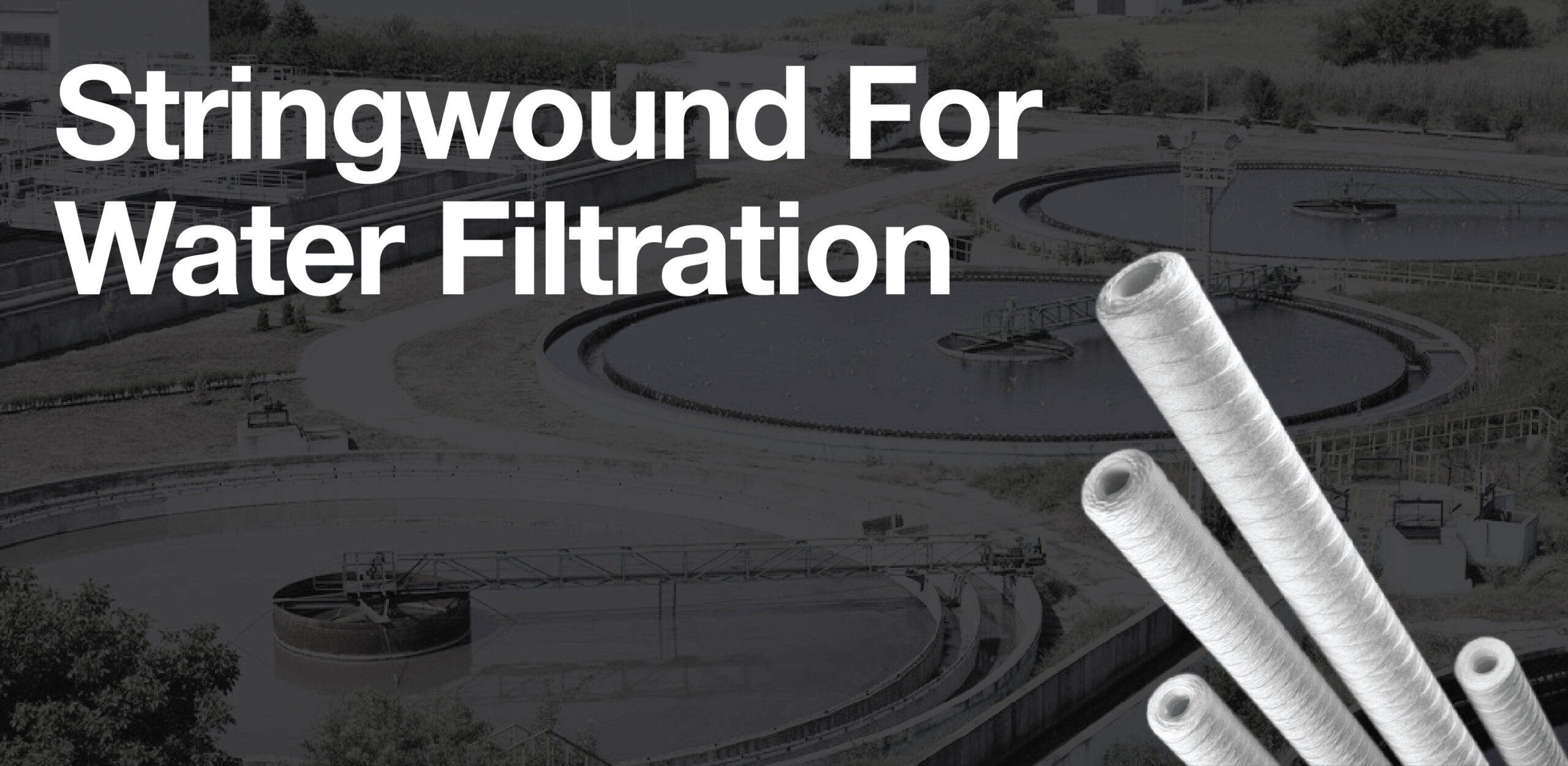
String-wound filters are commonly employed in water filtration systems due to their reliable performance in removing suspended solids, particulate matter, and other contaminants from water. These filters are widely used in both municipal water treatment plants and industrial applications, where the quality of water is crucial for operational processes or consumer safety.
Construction and Design of String-wound Filters
A string-wound filter consists of a fibrous material wound around a central core, forming a depth filtration structure. The construction of the filter is designed to create a multi-layer filtration matrix.
As water flows through the filter:
Materials Used:
The wound design of the filter allows it to handle a high volume of liquid while effectively removing particulate matter across a range of sizes. The depth of the filter is an essential feature because it increases the surface area available for contaminant retention, thus increasing the dirt-holding capacity of the filter and extending its service life.
Filtration Efficiency and Performance
String-wound filters are particularly effective in applications where the water is contaminated with a significant amount of suspended solids or particulates. The depth filtration mechanism enables these filters to capture a broad spectrum of contaminant sizes. As the water passes through the filter, the particles are progressively trapped in the fibrous layers of the wound material, making it possible to achieve high removal efficiencies even for fine particulate matter.
The filtration performance is influenced by several factors, including the winding density, the material of the string, and the dimensions of the filter. Filters with tighter winding densities are more effective in capturing smaller particles, while looser wound filters tend to have higher flow rates but are less effective in capturing fine particulates. The versatility of string-wound filters allows them to be used across various stages of filtration, from pre-filtration to final polishing, depending on the specific requirements of the water treatment process.
Applications in Water Treatment Systems
String-wound filters are used extensively in both municipal and industrial water filtration systems. They are particularly valuable in pre-filtration stages, where they help to remove large particles and debris before finer filtration processes, such as reverse osmosis, are employed. In reverse osmosis systems, string-wound filters serve to protect the more delicate membranes by removing large suspended solids that could cause fouling or damage.
In industrial applications, string-wound filters are employed in water systems for cooling, washing, or other processes that require clean water. Their ability to handle high flow rates and their relatively low cost make them a popular choice for large-scale filtration operations. Additionally, string-wound filters are used in systems that process well water or surface water, where the particulate content tends to be higher.
While they are not designed to remove dissolved contaminants, string-wound filters provide a highly efficient means of reducing suspended solids and particulate matter, ensuring that the water used in industrial and municipal applications meets quality standards.
Role in Different Water Treatment Plants
String-wound filters play an essential role in various types of water treatment plants, where their function is crucial to ensuring the cleanliness and safety of water before it enters distribution systems or industrial processes. Here are some of the key water treatment plants where string-wound filters are frequently used:
Advantages of String-Wound Filters
- High Dirt-Holding Capacity: Multi-layer construction captures a wide range of particle sizes.
- Versatility: Adapts to various water filtration needs, from municipal systems to industrial processes.
- Cost-Effectiveness: Durable design ensures long service life with minimal replacement costs.
- Chemical Compatibility: Handles a broad spectrum of water compositions.
- Ease of Installation: Compatible with most standard housings and systems.
Conclusion
String-wound filters are a cornerstone of water filtration technology, offering an efficient and economical solution for removing suspended solids and particulate matter. Their adaptability makes them indispensable in diverse settings, from municipal water treatment plants to industrial applications, including CETP, ETP, STP, and WTP processes.
By ensuring clean, safe water for human consumption and industrial operations, string-wound filters contribute significantly to meeting global water quality standards. Investing in high-quality string-wound filters not only enhances filtration efficiency but also supports sustainable water management practices.
Explore our range of string-wound filters to optimize your water filtration system and achieve superior performance.
How can Gopani Help?
One often encounters the challenge of maintaining optimal efficiency while minimizing consumption. It is here that the ingenuity of filter cartridges comes into play, offering a plethora of solutions tailored to diverse needs.
Understanding Your Unique Requirements
Our approach begins with a study of your specific requirements. We recognize that every application is unique, presenting its own set of challenges and demands. By delving into the intricacies of your operations, we aim to understand the nuances that define your needs. This knowledge forms the cornerstone of our ability to recommend the most suitable filter cartridges for you.

By selecting the appropriate filter cartridge from our range, you can achieve significant improvements in efficiency. Our cartridges are designed not only to filter contaminants effectively but also to optimize the overall performance of your systems. This leads to reduced energy consumption, extended lifespan of equipment, and lower operational costs.