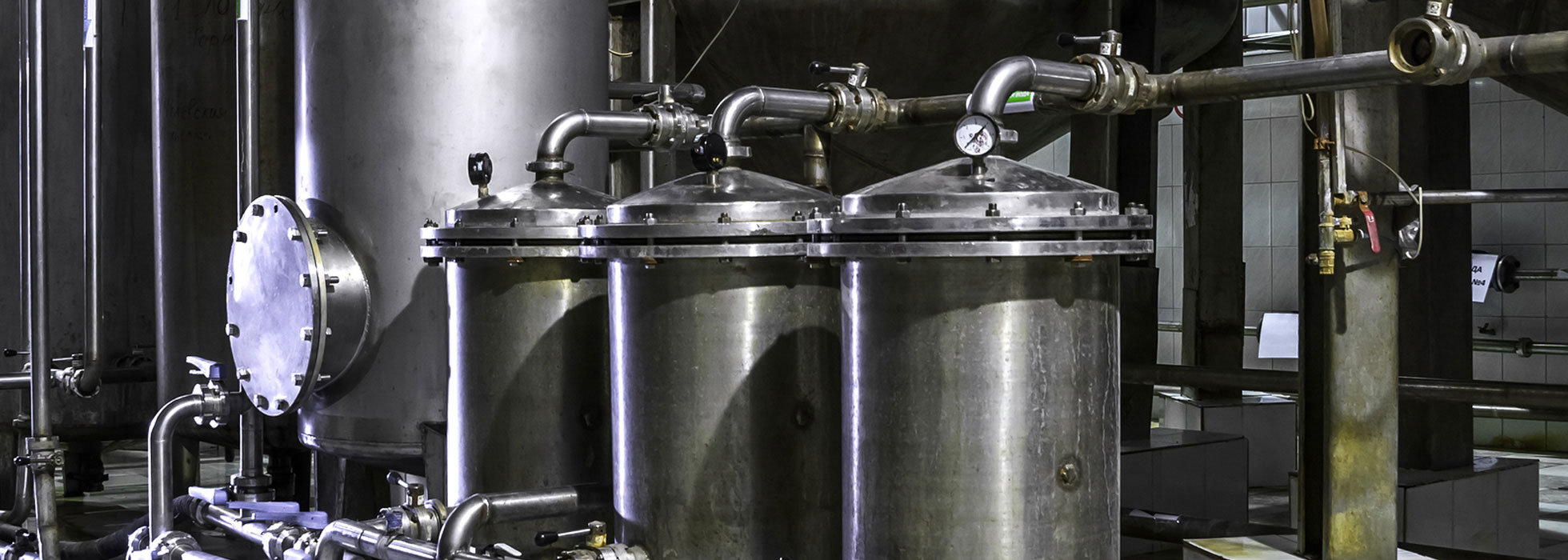
Up to 99% precious metal recovery with sintered metal filtration – single-pass, fully closed, zero consumable waste

Up to 99% Precious Metal Recovery · Single-Pass Filtration · 100% In-House Sintered Metal Manufacturing · New Systems, Retrofits & Element Replacements
Gopani designs, manufactures, and commissions catalyst recovery filtration systems that recover up to 99% of precious metal catalysts - Palladium (Pd/C), Platinum (Pt/C), Rhodium (Rh/C), Ruthenium, and Raney Nickel - in a single filtration pass, using sintered metal filter elements manufactured entirely in-house at our Ahmedabad facility. Some systems can also be designed with primary sintered metal filters and secondary or tertiary polishing filters to deliver fully polished product.
Whether you are building a new hydrogenation plant, upgrading from outdated sparkler or plate-and-frame filters, or looking to retrofit existing sintered metal candles with higher-performance elements that reduce catalyst attrition and increase reactor availability - Gopani is your single-source partner for the complete solution.
Why this matters financially: Palladium trades at over $30,000/kg. Rhodium exceeds $140,000/kg. A pharmaceutical plant running 200 hydrogenation batches per year with just 2% catalyst loss on Pd/C can lose ₹50–80 lakhs annually in catalyst attrition alone - before accounting for the downstream cost of reduced reactor availability, additional filtration passes, and hazardous waste disposal of catalyst-contaminated filter pads.
Gopani helps eliminates these losses. Our sintered metal catalyst recovery systems can deliver single-pass, particle-free filtrate in a fully closed circuit - no operator exposure, no catalyst-contaminated disposables, no multi-pass recirculation, and no compromise on recovery rate.
Request a Free System Assessment: Call / WhatsApp +91-706 901 8049 | Email: sales@gopani.com
Precious metal catalysts represent one of the highest-value consumables in pharmaceutical, fine chemical, and petrochemical manufacturing. The financial case for high-efficiency recovery is overwhelming:
| Catalyst | Approximate Market Price (2024–25) | Annual Loss at 2% Attrition (200 batches) |
|---|---|---|
| Palladium (Pd) | ₹25–30 lakh/kg ($30,000+/kg) | ₹50–80 lakh/year |
| Platinum (Pt) | ₹25–28 lakh/kg ($30,000+/kg) | ₹50–70 lakh/year |
| Rhodium (Rh) | ₹1.1–1.4 crore/kg ($140,000+/kg) | ₹2–3 crore/year |
| Raney Nickel | ₹2,000–5,000/kg | Lower value but high volume |
The hidden costs beyond catalyst value:
For consultants and specifiers: If you are designing or specifying a hydrogenation system, catalyst recovery system, or H₂O₂ production facility, selecting the right filtration technology at the design stage eliminates years of operational losses. Gopani provides free application engineering support for system sizing, element selection, and P&ID integration.
Sintered metal filtration is the gold standard for catalyst recovery because it delivers surface filtration - particles are captured on the outer surface of a rigid metallic membrane, not trapped within a depth matrix. This is fundamentally different from, and superior to, depth filtration methods used in sparkler filters, bag filters, and filter aid systems.
Gopani sintered metal filter elements are manufactured from atomised metal powder (typically SS 316L, Hastelloy, or other alloys) that is pressed and sintered at high temperature to create a rigid, porous structure with precisely controlled pore sizes ranging from 0.5 µm to 25 µm.
Surface filtration advantage: Because catalyst particles are captured on the outer surface of the element (a well designed filter will not allow catalysts or impurities to be embedded within the sintered filter media), they form a recoverable cake that can be backwashed off the element with clean solvent or process fluid. This means:
Gopani's sintered metal filter elements for fine micron applications feature a proprietary asymmetrical dual-layer construction: a thin, precision-graded active filtration layer (~200 µm) bonded to a coarser structural carrier. This design delivers:
Gopani catalyst recovery system can also incorporate heel filters - small auxiliary filter elements positioned at the lowest point of the filter vessel. After the main batch filtration is complete, the heel filter captures the residual liquid (the "heel") that remains in the vessel below the main filter elements. This ensures complete recovery of catalyst from every drop of process fluid, maximising overall recovery efficiency.
Gopani catalyst recovery systems operate in a fully closed circuit. The reactor discharge, filtration, backwash, and cake recovery cycle is entirely enclosed - no open handling of catalyst slurry, no exposure of operators to solvents or pyrophoric materials (Raney Nickel), and no fire or explosion risk from volatile organic solvents. This is not optional for Raney Nickel or flammable hydrogenation processes - it is a safety requirement that Gopani builds into every system as standard.
The following comparison is based on Gopani's direct experience retrofitting plants that previously used sparkler filters, plate-and-frame filters, and bag filters for catalyst recovery:
| Parameter | Sparkler Filter | Plate & Frame Filter | Bag / Cartridge Filter | Gopani Sintered Metal System |
|---|---|---|---|---|
| Catalyst Recovery Rate | 85–92% | 90–95% | 80–90% | Up to 99% |
| Filtration Passes Required | 2–3 passes typical | 2–3 passes | Multiple | Single pass |
| Catalyst Attrition Risk | High - Pd carried out with pad disposal | Moderate - cake handling losses | High - bag disposal = catalyst loss | Minimal - surface filtration, no consumable losses |
| Operator Exposure | High - open pad removal | High - open cake discharge | Moderate - bag handling | None - fully closed circuit |
| Fire / Explosion Risk (Raney Ni) | High - open system | High - open system | High | Low - inert gas blanketing standard |
| Filter Media Cost | Pads: recurring cost every batch | Plates: periodic replacement | Bags: disposable every batch | Zero - element lasts 5–10+ years |
| Automation Level | Manual | Semi-automatic | Manual | Fully automatic (PLC/DCS) |
| Hazardous Waste Generated | Catalyst-contaminated pads → hazardous waste | Filter aid + cake → waste | Catalyst-contaminated bags → waste | Zero consumable waste - catalyst backwashed and recovered |
| Heel Recovery | Poor - residual liquid lost in vessel | Poor | None | Integrated heel filter - 100% liquid recovery |
| Reactor Availability Impact | Adds 2–4 hours per batch (multi-pass) | Adds 1–3 hours | Adds 1–2 hours | Fastest cycle - single pass, automated backwash |
| Typical Element Lifespan | Single use (per batch) | 500–1000 batches (plates) | Single use | 5–10+ years (5000+ batches) |
The sparkler filter problem explained: The single biggest issue with sparkler filters in catalyst recovery is that when the filter pads are removed after each batch, a significant quantity of precious metal catalyst remains embedded in the pad. These pads are typically sent to a precious metal refiner for recovery, but the refining process recovers only a fraction of the value, and with considerable delay. In many plants, pads accumulate for months before being sent for recovery. Gopani's sintered metal system eliminates this problem entirely - every gram of catalyst is backwashed and returned to the process in real time.
| Parameter | Specification / Range |
|---|---|
| Parameter | Specification / Range |
| Filter Element Type | Sintered metal powder; asymmetrical dual-layer membrane available for fine microns |
| Materials of Construction - Elements | SS 316L (standard); SS 304; Hastelloy C-276; Inconel 600; Monel 400; Titanium; Zirconium; High Nickel alloys |
| Materials of Construction - Housing | SS 316L, SS 304, Hastelloy, other alloys per application; seamless or welded construction |
| Micron Ratings Available | 0.5, 1, 2, 3, 5, 10, 25 µm (custom ratings available) |
| Operating Temperature Range | Cryogenic (–150°C) to 900°C depending on alloy selection |
| Design Pressure | Engineered per application; ASME Section VIII / PED / IBR code stamp available |
| Element Dimensions | Standard: OD 25 MM to 60–75 mm, lengths 250–1500 mm; custom OD and lengths available |
| System Flow Capacity | Single housing: up to 1,500 m³/hr; multi-housing skids for higher flows |
| Recovery Efficiency | Up to 99% (process and catalyst dependent) |
| Filtration Method | Surface filtration - single pass; backwash regeneration |
| System Operation | Closed-circuit; fully automatic; PLC or DCS controlled |
| Backwash Method | Reverse-flow gas or liquid backwash; automated cycle with adjuon - Elements |
| Control Panel Options | Flameproof (FLP) for Zone 1/2; non-FLP for safe areas; ATEX/IECEx available |
| Valve Options | Pneumatically or electrically actuated; butterfly or ball valves per application |
| Heel Filter | Integrated as standard - ensures 100% residual liquid recovery |
| Element Lifespan | Upto 10+ years with proper maintenance and periodic cleaning |
| Certifications | ISO 9001:2015, ISO 14001, ISO 45001 (IMS); ASME U-stamp available; IBR approval available; PED compliance; CE marking |
| Manufacturing | in-house: sintered metal elements + outsourced housings + skids + control panels; in-house NDE (radiography, ultrasonic, dye penetrant), under direct supervision and with Gopani’s QA-QC |
Pd/C is the most widely used heterogeneous catalyst in pharmaceutical hydrogenation. Gopani’s sintered metal systems recover Pd/C at up to 99% efficiency in a single pass, eliminating the 2–5% losses typical with sparkler and plate-and-frame filters. For a pharmaceutical API plant running 200+ hydrogenation batches per year, this translates to minimum ₹30–80 lakhs in annual savings on catalyst alone - plus the additional value of increased reactor availability from single-pass filtration.
Pt/C catalysts are used in selective hydrogenations, fuel cell catalyst preparation, and fine chemical synthesis. Gopani systems handle Pt/C with the same up to 99% single-pass recovery, with element materials selected for compatibility with the specific solvent system (aqueous, organic, acidic, or alkaline).
Rhodium is the most expensive of the PGM catalysts - trading at over ₹1 crore per kilogram. At these price levels, even 0.1% additional recovery per batch has a significant financial impact. Gopani's asymmetrical dual-layer elements provide the finest filtration grade available (down to 0.5 µm) for maximum Rh recovery, with integrated heel filters to capture every last trace from the vessel heel.
Ruthenium-based catalysts are increasingly used in pharmaceutical synthesis and fine chemical manufacturing. Gopani systems are configured for Ru recovery with appropriate material selection and micron rating for the specific catalyst particle size distribution.
Raney Nickel presents unique filtration challenges: it is pyrophoric (spontaneously ignites in air when dry), has a high specific gravity (settles rapidly), and is used in very high loading concentrations. Gopani's catalyst recovery systems for Raney Nickel are specifically designed to address these challenges:
Fluid Catalytic Cracking (FCC) catalyst fines must be recovered from slurry oil and other refinery process streams. Gopani sintered metal systems handle the high-temperature, high-pressure conditions typical of FCC duty, with element materials rated for the specific refinery environment. For Indian refineries seeking to reduce dependence on imported filtration systems, Gopani offers a domestic manufacturing alternative with comparable performance and significantly faster delivery and service response.
| Industry | Typical Applications | Catalyst Types | Recommended System Configuration |
|---|---|---|---|
| Pharmaceuticals & API | Hydrogenation reactors; debenzylation; reductive amination; selective reduction; transfer hydrogenation | Pd/C, Pt/C, Rh/C, PtO₂, Raney Ni | SS 316L elements, 1–5 µm; GMP design; CIP/SIP capable; FLP panel |
| Hydrogen Peroxide (H₂O₂) Production | Working solution filtration; Pd catalyst recovery from hydrogenation stage; anthraquinone process filtration | Pd-based (supported and unsupported) | SS 316L or Hastelloy elements; 2–3 stage filtration; high flow skids |
| Fine Chemicals & Intermediates | Catalytic hydrogenation; coupling reactions; reduction reactions; specialty synthesis | Pd/C, Pt/C, Rh/C, Ru catalysts | Application-specific element selection; multi-alloy options |
| Petrochemicals & Refining | FCC catalyst fines recovery; hydrocracking catalyst recovery; reforming catalyst filtration; slurry oil filtration | FCC catalyst, Ni/Mo, Co/Mo, Pt/Re | High-temperature alloys; ASME-coded vessels; IBR approval |
| Edible Oil & Food Processing | Hydrogenation catalyst recovery in edible oil hardening; nickel catalyst filtration | Raney Nickel, supported Ni | Food-grade SS 316L; closed circuit for Ni safety |
| Rubber, Additives & Dyes | Catalyst recovery in specialty chemical synthesis; pigment and dye intermediates | Various precious metal and base metal catalysts | Custom-engineered per process chemistry |
Gopani serves three distinct retrofit and upgrade markets - each with a different value proposition and customer profile. Whether you are a plant operator, a process consultant, or an EPC contractor, Gopani has a solution that fits your requirement.
Target: Plants currently using sintered metal candles from any manufacturer.
This is the fastest, lowest-cost upgrade path. Gopani manufactures drop-in replacement sintered metal filter elements that fit existing housings - same dimensions, same end connections, same seal configuration - but with improved performance characteristics:
ROI: Typical payback period for element replacement is 3–6 months based on catalyst savings alone, before accounting for reactor availability improvements.
Target: Plants currently using sparkler filters, plate-and-frame filters, Nutsche filters, or bag filters for catalyst recovery.
This is the high-value upgrade - replacing an entire outdated filtration technology with a modern sintered metal system. The operational and financial benefits are transformational:
The sparkler filter problem: In sparkler filter systems, precious metal catalyst (typically Pd/C) is deposited on filter pads along with the process fluid. After each batch, the pads are removed - and a significant quantity of palladium goes with them. These catalyst-laden pads are then sent to a precious metal refiner for recovery, but:
Gopani's replacement: A fully closed sintered metal system that recovers up to 99% of catalyst in a single pass, returns it directly to the reactor, generates zero consumable waste, requires no operator exposure, and operates automatically. The system pays for itself in months, not years.
Typical annual savings (pharma plant, 200 batches, Pd/C):
Target: New plant construction, capacity expansion, and greenfield projects - including EPC contractors and process consultants specifying catalyst recovery systems.
For new installations, Gopani supplies complete skid-mounted or field-erected catalyst recovery systems including:
Target: Process engineering consultants, design houses, and EPC contractors specifying catalyst recovery systems for end-user plants.
Gopani works with consultants at the design stage to ensure the catalyst recovery system is correctly specified from the outset. Our application engineering team provides:
Why specify Gopani: 100% Indian manufacturing means faster delivery (4–8 weeks vs 16–24 weeks for imported systems), local service and spare parts support, competitive pricing, and no import duty or forex exposure. For Make in India projects and government tenders, Gopani qualifies as a domestic manufacturer.
| Gopani Advantage | What It Means For You |
|---|---|
| In-House Sintered Metal Manufacturing | We manufacture our own sintered metal filter . This gives us full control over quality, lead time, and cost. |
| Complete System Integration | Elements + housings + skids + piping + control panels - everything from a single manufacturer. No multi-vendor coordination headaches. |
| Controlled Manufacturing | Precision machining for consistent dimensional tolerances across production batches. Critical for drop-in replacement elements. |
| Retrofit Expertise | We have replaced sparkler systems, plate-and-frame filters, and competitor sintered metal elements across pharma and chemical plants. We understand the retrofit process end-to-end. |
| Application Engineering Team | system sizing, element selection, and process consultation. We don't just sell hardware - we solve filtration problems. |
| 30+ Years Filtration Experience | Gopani has been manufacturing filtration systems since 1990. Our engineers have solved catalyst recovery challenges across industries |
| ISO 9001:2015 / ISO 14001 / ISO 45001 | Triple-certified Integrated Management System. Quality, environment, and safety - all audited and certified. Dakks |
| Make in India | Domestic manufacturer for government tenders, public sector projects, and Make in India mandates. No import dependency. |
Gopani's catalyst recovery filter elements undergo multi-stage quality verification at every point in the manufacturing process:
Q1. What is the difference between sintered metal filters and sparkler filters for catalyst recovery?
Sintered metal filters use a rigid, reusable metallic membrane that captures catalyst particles on the surface (surface filtration). The catalyst cake is backwashed off and recovered. Sparkler filters use disposable filter pads that trap catalyst within the media (depth filtration). The key differences: sintered metal achieves up to 99% recovery in a single pass vs 85-92% for sparkler; sintered metal elements last 5-10+ years vs single-use pads; sintered metal operates in a closed circuit (no operator exposure) vs open handling with sparklers; and sintered metal generates zero consumable waste vs catalyst-contaminated pads that require hazardous waste disposal or precious metal refining.
Q2. Can Gopani replace my existing sintered metal candles from GKN, Mott, or Pall?
Yes. Gopani manufactures drop-in replacement sintered metal elements that match the dimensions, end connections, and seal configurations of elements from GKN, Mott, Pall, Porvair, and other manufacturers. Our 100% in-house manufacturing means we can replicate any element geometry with shorter lead times and competitive pricing. Many customers switching to Gopani elements also see improved performance due to our asymmetrical dual-layer construction, which provides lower pressure drop, better backwash efficiency, and reduced catalyst attrition compared to conventional single-layer elements.
Q3. What catalyst recovery rate can I expect with a Gopani system?
High improvement and Up to 99%, depending on the catalyst type, particle size distribution, process fluid properties, and operating conditions. For standard pharmaceutical Pd/C hydrogenation applications with proper system sizing, 99.5-up to 99% single-pass recovery is typical. Gopani's application engineering team will review your specific process data and provide a performance estimate before you commit.
Q4. How much money can I save by switching from sparkler filters to Gopani sintered metal?
Savings generally run into crores annually with Pd, Pt, and other high-cost precious metal catalysts. A typical pharmaceutical plant running 200 hydrogenation batches per year on Pd/C can save ₹40 lakh to ₹1 crore+ annually from: improved catalyst recovery (₹30-80 lakh), increased reactor availability from single-pass filtration, elimination of consumable filter pad costs (₹5-15 lakh), and reduced hazardous waste disposal costs. The system typically pays for itself within 6-12 months. Contact us with your batch details for a specific ROI calculation.
Q5. Is a closed-circuit system mandatory for Raney Nickel?
Yes. Raney Nickel is pyrophoric - it spontaneously ignites when exposed to air in a dry state. Any catalyst recovery system handling Raney Nickel must be fully closed with nitrogen blanketing to prevent air contact. Gopani builds this as standard into every Raney Nickel catalyst recovery system. Open systems (sparkler, plate-and-frame) present serious fire and explosion risks when used with Raney Nickel.
Q6. How long do sintered metal filter elements last?
Can last 10+ years with proper maintenance, periodic cleaning (CIP or ultrasonic), and operation within the rated parameters. Some Gopani elements in continuous industrial service have operated for over 5,000 batches without replacement. Element life depends significantly on the process fluid, catalyst type, operating temperature, cleaning protocol, and operator practices. It is important to note that actual lifespan varies widely and depends heavily on maintenance as well as operator discipline.
Q7. What materials are available for corrosive or high-temperature applications?
Gopani manufactures sintered metal elements in SS 316L (standard), SS 304, Hastelloy C-276 (for strong acids and chloride environments), Inconel 600 (for high-temperature oxidising environments), Monel 400 (for reducing environments), Titanium (for strong oxidising acids), and Zirconium (for sulfuric acid service). All alloys are sintered in-house. Contact our application engineering team with your process fluid details and temperature/pressure conditions for material recommendation.
Q8. Can Gopani supply a complete skid-mounted system ready for installation?
Yes. Gopani supplies complete skid-mounted catalyst recovery systems including filter vessel, elements, piping, valves, instruments, control panel, and optional nitrogen supply system. The skid arrives at your site ready for connection to your process piping and utilities. We also provide field-erected systems for larger installations. Installation supervision and commissioning support are available.
Q9. What is the lead time for a catalyst recovery system?
Standard element replacements: 6-8 weeks. Complete systems (standard design): 8-10 weeks. Custom-engineered systems (special alloys, large size, code-stamped vessels): 8-12 weeks. Emergency element replacements: contact us for expedited delivery. Compared to imported systems (16-24 weeks typical), Gopani’s domestic manufacturing provides significantly faster delivery.
Q10. Do you supply to international markets?
Yes. Gopani exports catalyst recovery systems and sintered metal elements to customers in the USA, Europe, Middle East, Africa, Southeast Asia, and Australia. We provide full export documentation, sea/air freight packaging, and country-specific compliance (where possible). International enquiries: sales@gopani.com | WhatsApp +91-706 901 8049.
Q11. How does catalyst recovery work in H₂O₂ production?
In the anthraquinone process for H₂O₂ production, a palladium-based catalyst is suspended in the working solution during the hydrogenation stage. After hydrogenation, the catalyst must be separated from the working solution before it proceeds to the oxidation stage. Gopani’s sintered metal filtration system captures the Pd catalyst in a single pass, backwashes it for reuse, and delivers particle-free working solution to the next stage. Multi-stage filtration (primary + polishing) is typical for H₂O₂ plants to achieve the required filtrate clarity.
Q12. Why should I choose Gopani over GKN, Mott, or Pall for my catalyst recovery system?
Three reasons: (1) Cost - Gopani’s 100% Indian manufacturing means 30-50% lower cost than imported systems, with no forex risk or import duty; (2) Delivery - 6-8 weeks vs 16-24 weeks for imported systems; (3) Service - local application engineering, spare parts, and service support in India. Technical performance is comparable or superior - Gopani’s asymmetrical dual-layer elements provide lower pressure drop and better backwash efficiency than many competitor single-layer elements. And for retrofit projects, we have specific experience replacing GKN, Mott, and Pall elements in Indian plants.
Talk to our application engineering team for a free catalyst recovery system assessment. Whether you need a new system, a retrofit, or replacement elements - we’ll review your process data and recommend the right solution.
| How to Reach Us | For |
|---|---|
| Call / WhatsApp: +91-706 901 8049 | Quotes, system sizing, urgent element replacements, and technical consultation |
| Email: sales@gopani.com | General enquiries, bulk orders, export quotes, EPC/consultant specifications, and retrofit assessments |
| Website: www.gopani.com | Full product catalogue - sintered metal filters, filter housings, cartridge filters, bag filters, and complete filtration systems |
Gopani Product Systems Pvt. Ltd. | ISO 9001:2015 Certified | 100% In-House Manufacturing | 40+ Years Experience | Exports to 40+ Countries | Make in India
Note: GKN, Mott, and Pall are registered trademarks of their respective owners. These names are referenced for compatibility and comparison purposes only.
Explore more about catalyst recovery filtration and related industrial solutions from Gopani: